 Comunications
News
Second Diploma Course on Comprehensive Disaster Risk Management in Latin America and the Caribbean organised by SELA and UCSG concludes
Comunications
News
Second Diploma Course on Comprehensive Disaster Risk Management in Latin America and the Caribbean organised by SELA and UCSG concludes
The Latin American and Caribbean Economic System (SELA) successfully completed the Second Diploma Course on Comprehensive Disaster Risk Management in Latin America and the Caribbean: resilience for adaptation to climate change, organised in conjunction with the Catholic University of Santiago de Guayaquil, with the participation of 18 officials from Bolivia, Colombia, Ecuador, Mexico, Peru, the Dominican Republic and Venezuela.
On behalf of the Permanent Secretariat of SELA, the Coordinator of the Social Development Area, Gustavo Herrera, highlighted that this learning space allowed participants to acquire the knowledge and tools necessary to design, implement and evaluate more effective public policies.
“Reaching this milestone in this space of knowledge and learning is a clear demonstration of SELA’s commitment to building more resilient and secure societies. Its participation was fundamental in strengthening disaster risk management systems in their respective countries and making Latin America and the Caribbean a safer, more prepared and resilient region,” said the Coordinator.
Launched on 18 June, this second edition of the diploma course aimed to provide knowledge on planning and implementing measures that promote safer and more sustainable communities, with a collaborative and multidisciplinary approach, seeking to empower participants to face current and future challenges associated with climate change in the region.
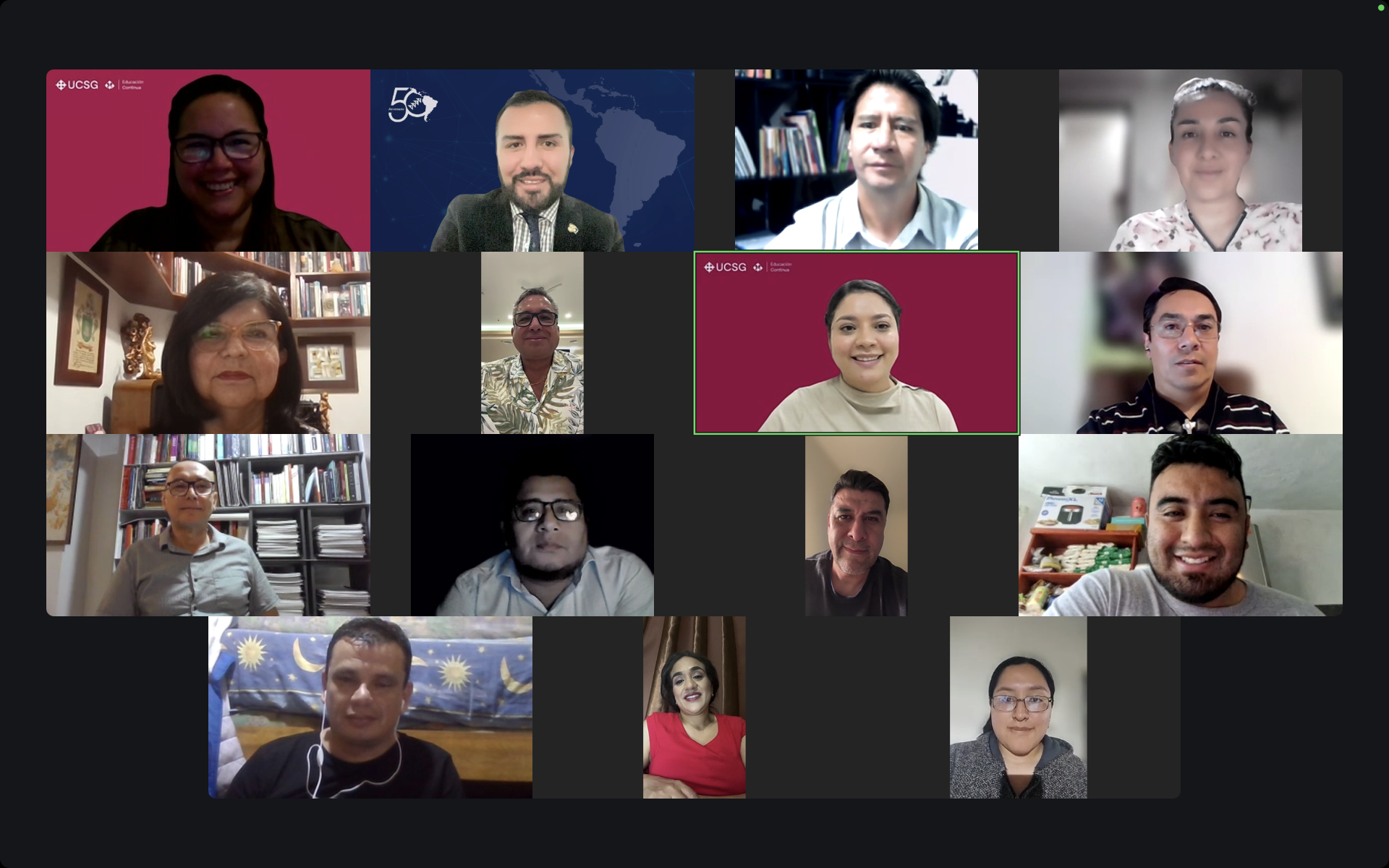
At the ceremony, SELA and UCSG authorities presented the Diploma Certificates to the 18 participating officials, who belong to government institutions in Bolivia, Colombia, Ecuador, Mexico, Peru, the Dominican Republic and Venezuela.
The Second Diploma Course on Comprehensive Disaster Risk Management in Latin America and the Caribbean is part of Programme II of the Social Development Area of SELA’s Work