The Latin American and Caribbean Economic System (SELA), in collaboration with the International Organisation for Migration (IOM), held the fourth edition of the online training course on migration data, a training programme designed to strengthen Member States’ technical capacities in the field of human mobility.
The event brought together IOM specialists and officials and representatives from migration agencies in various countries across Latin America and the Caribbean, with the aim of promoting the use of statistical information to design public policies based on empirical data.
On the first day, the session addressed recent migration trends in the region, the exchange of information between governments, and strategic foresight applied to planning. On the second day, the specialists examined the Displacement Monitoring Matrix in greater depth, as well as information management in emergency contexts.
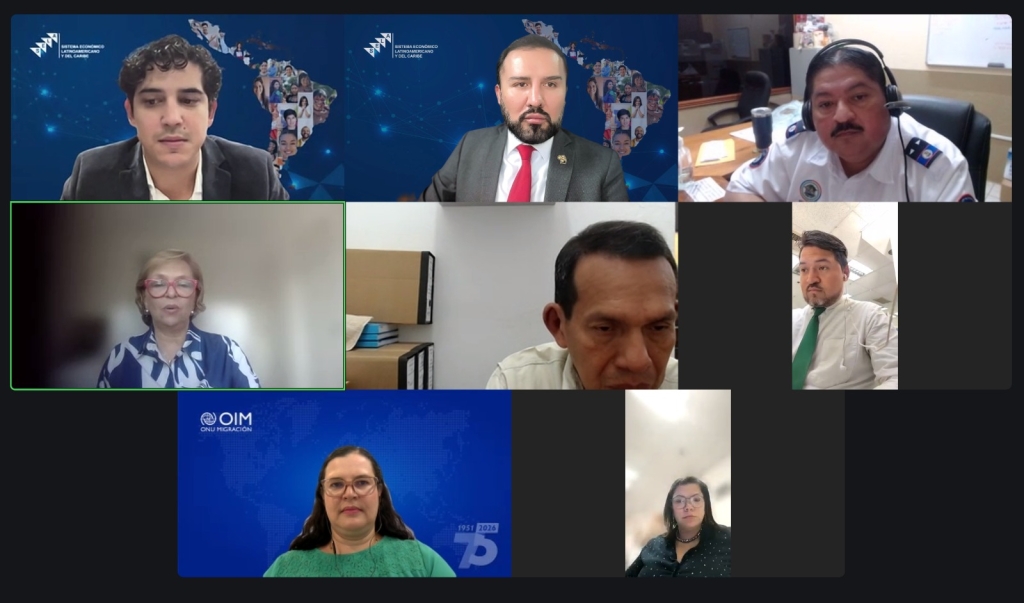
In his address, SELA’s Social Development Coordinator, Gustavo Herrera, emphasised that human mobility is a dynamic reality that cuts across societies and institutions; therefore, understanding it requires going beyond simply looking at the figures.
“Human mobility requires access to reliable information, an understanding of its causes, and the ability to translate that knowledge into public policies capable of responding promptly to people’s needs. Because behind every piece of migration data lies a human story, and behind every public decision there must be information that enables us to protect rights and create better opportunities,” he emphasised.
He also pointed out that migratory movements in Latin America and the Caribbean are taking place against a backdrop of persistent inequalities and situations of vulnerability, which calls for coordinated responses and the timely use of disaggregated and comparable data to anticipate scenarios and strengthen the protection of migrants.
He reaffirmed SELA’s commitment to promoting training and technical cooperation initiatives that contribute to more efficient, coordinated and people-centred migration management. In this regard, he emphasised: “Effective migration governance is not measured solely by the information we are able to collect, but by our ability to use it to improve the lives of those who need it most.”
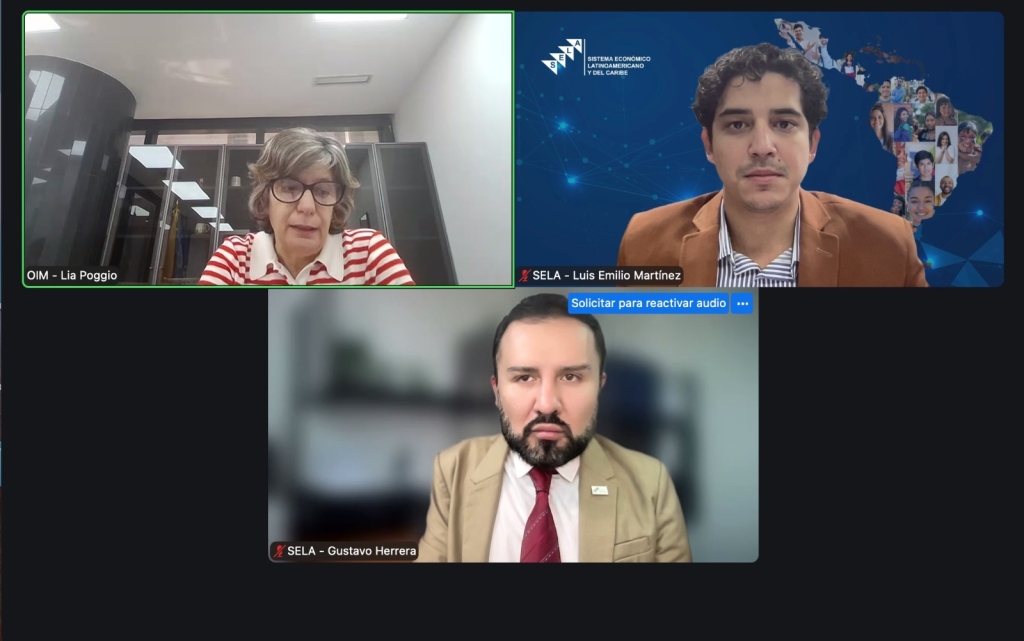
For her part, Ana Durán Salvatierra, Deputy Regional Director of Operations at the IOM Regional Office for the Americas, stressed the importance of having high-quality information to support decision-making. “The region needs data that we can understand and compare, which helps us anticipate challenges and which translates into concrete decisions, resulting in better responses for people,” she said.
This fourth edition builds on the technical cooperation process that SELA and the IOM have been promoting since 2023. Previous editions addressed topics relating to data literacy, governance indicators, trend analysis and tools for monitoring displacement. On this occasion, the programme explored in greater depth the management of information in emergency contexts and temporary accommodation.
Through these initiatives, SELA and the IOM reaffirm their commitment to strengthening institutional capacities and regional cooperation, promoting the strategic use of migration data as a tool to improve public policymaking, strengthen the protection of rights and move towards more effective and people-centred governance of human mobility.