 Comunications
News
Ambassador Lesly David reiterates that regional integration is a historical and strategic necessity
Comunications
News
Ambassador Lesly David reiterates that regional integration is a historical and strategic necessity
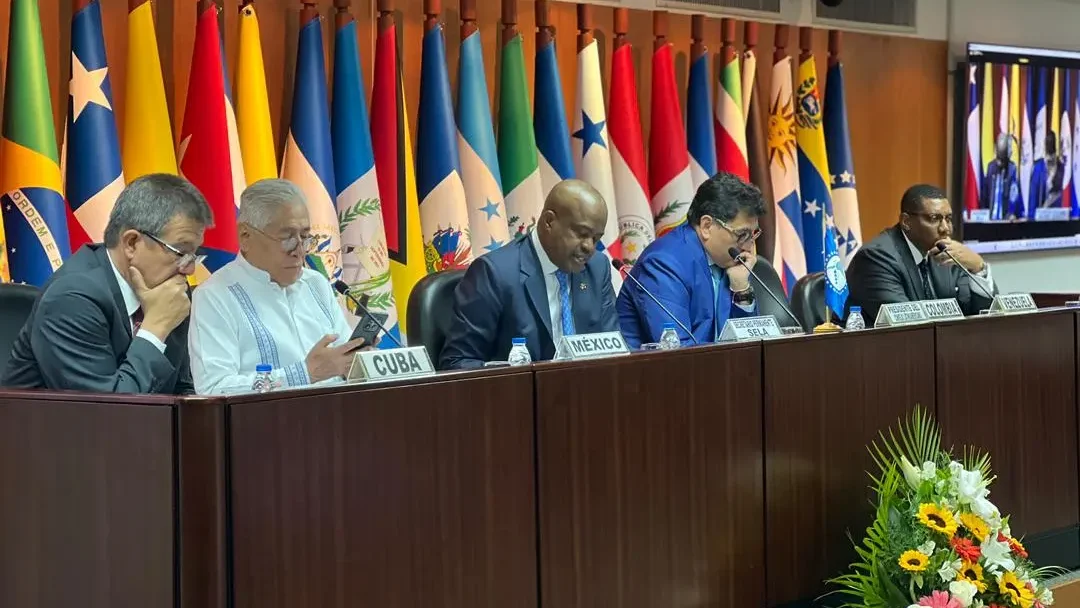
The Permanent Secretary of the Latin American and Caribbean Economic System (SELA), Ambassador Lesly David, confirmed at the 51st Regular Meeting of the Latin American Council that regional integration “is not an option, but a historical and strategic necessity.”
During his opening speech at the ministerial meeting, held on Thursday, 11 December, at SELA headquarters in Caracas, the Permanent Secretary pointed out that integration is the region’s “most powerful tool” for “combating global uncertainty.”
“It is not just about economics, but about building collective unity even from our differences. Our region, with its more than 660 million inhabitants, demands a clear vision and coordinated action from us,” he said.
He pointed out that, despite the wealth of the Latin American and Caribbean region, it remains “the most unequal region on the planet.”
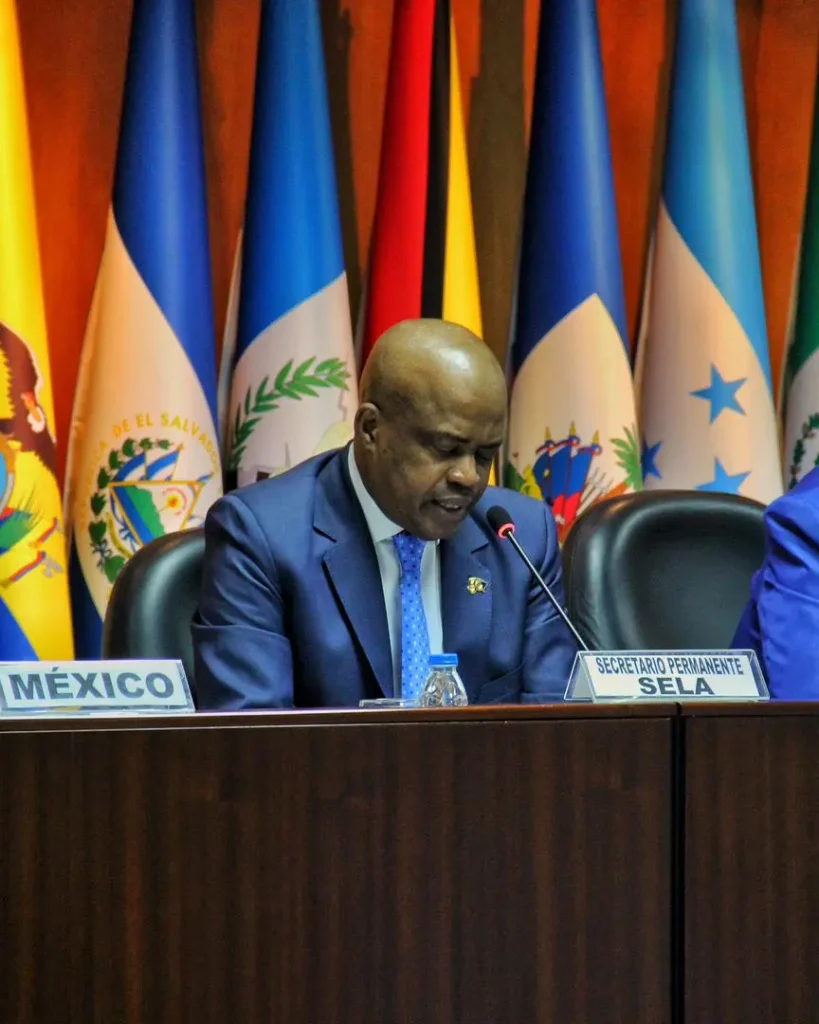
“Millions of our citizens still live in poverty, and extreme poverty remains at worrying levels, affecting women, young people and vulnerable communities in particular,” Ambassador David emphasised.
In the presence of representatives from Member States, Ambassador Lesly David highlighted that the Work Programme presented by the Permanent Secretariat is “a concrete response to these challenges, a roadmap that transforms good intentions into measurable actions.”
In this regard, he reaffirmed the “solemn commitment” of SELA’s Permanent Secretariat to conduct each of the activities proposed in the three established areas of work, comprising Economic Recovery, Social Development, and Digitalisation and Infrastructure.
In the Economic Recovery Area, the Secretary highlighted that SELA is committed to “making decisive progress” in Trade Facilitation, in addition to convening the “III Forum on investment cooperation between China and Latin America and the Caribbean” to attract the resources and technologies that will boost productive economies.
In the Social Development Area, he noted that SELA is committed to prioritising the Poverty Eradication project, articulating social policies that use cooperation as a “lever for development” as well as promoting virtual workshops on education strategies for the integration of migrant women and girls, which seek to ensure that “migration is not a source of exclusion, but an opportunity for development with a gender approach.”
He also highlighted the commitment, through the Digitalisation and Infrastructure Area, to promote digital transformation and develop a sustainable and ‘smarter’ infrastructure in Latin America and the Caribbean. “SELA recognises that modern infrastructure is the indispensable platform for the digital economy and that the synergy between both axes is key to development,” he said.
“SELA reaffirms itself as a genuine space for addressing and developing public policy proposals at the service of our region,” he said.
The Permanent Secretary assured that the Organisation “will work tirelessly, with transparency and vision,” so that the Work Programme for 2026-2029 translates into “greater well-being for every man, woman and child in our beloved region.”
The Latin American Council is SELA’s highest authority and is composed of one representative from each Member State. Its powers include considering, evaluating and approving the work programme for the following year; the annual report presented by the Permanent Secretariat; the budget and financial statements of the mechanism; and examining the activities of the Secretariat and the Action Committees.
After 50 years of uninterrupted work, SELA has become a leading regional organisation, conducting permanent consultation and coordination, cooperation and joint economic and social promotion activities, with international legal personality, before countries, groups of nations, forums and international organisations.
During the 51st Regular Meeting of the Latin American Council, SELA reiterated that it is essential to work towards the integration of the region through intra-regional cooperation in order to advance towards economic recovery and the development of the peoples of Latin America and the Caribbean.